Before the Casey Anthony trial, before OJ Simpson, and even before Roe vs Wade this Eastern Tennessee town was the site of the OJ Simpson trial of its day. A trail known as the Scopes Trial of 1925 that was about teaching biologic evolution in the classroom. Dayton is more than just the site of a major court case, its position in the ridge and valley province allows for abundant natural scenery. The town also has a strawberry festival that features a carnival atmosphere that celebrates Rhea County’s history as a strawberry producing area. From courtroom trails, arts and crafts, scenic views, and strawberries I hereby present your highlighted community of Dayton, TN.
Location:
Latitude: 35.51 degrees North
Longitude: 84.98 degrees West
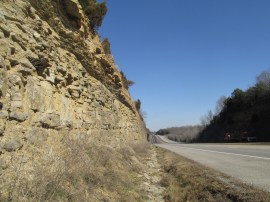
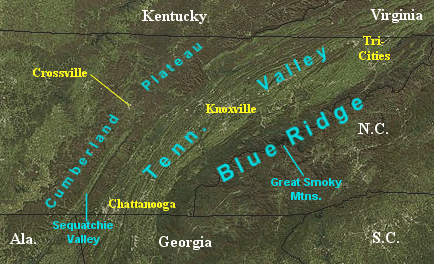
Dayton, TN is located in the Ridge and Valley Province of Eastern TN. This area was uplifted at various times from between 450 and 250 Million Years Ago due to the uplift of the Appalachian Mountains, which were formed by continents at that time colliding. As the land was uplifted rocks that are more prone to weathering such as limestone weathered and formed the valleys and more resistant rock formed the ridges. The western part of Rhea County west of Dayton is the eastern edge of the Cumberland Plateau. I talked about the Cumberland Plateau more in my Altamont/Monteagle post so refer to that post for more information about that area.
Dayton, TN contains a Humid Subtropical Climate just like all of Tennessee (except for the higher elevations in the Smokies). With that being said there are some variations in Rhea County with the ridges and the Cumberland Plateau section of the county being a few degrees cooler versus valley locations like Dayton. Because of this those higher elevations can occasionally see snow in the winter while Dayton is stuck with a cold rain. Severe weather including tornadoes can occasionally strike the area. On April 27th, 2011 a deadly EF-4 tornado from Bledsoe County moved across the Cumberland Plateau region of Rhea County before dissipating near Graysville. This was part of a historic tornado outbreak that spawned over 100 tornadoes from Virginia down to Mississippi and Alabama.

Early History:
http://rheacountytn.com/about-rhea-county/history/
^^ A lot of the information presented below comes from these sources ^^
Dayton was founded and was initially known as Smith’s Crossroads until its name was changed to Dayton. Rhea (pronounced Ray) County was founded in 1807 and was created from Roane County. Rhea is named after an US Congressman and Revolutionary War soldier. Rhea County’s shape is a bit interesting as it is only 13 miles wide but is over 30 miles long. This is due to the Tennessee River to its east and the Cumberland Plateau to its west which both act as natural barriers to movement. Most of the settlements are in a north-south running valley.
In the Civil War, Rhea County was strongly sympathetic to the Confederate side. Although Tennessee seceded from the Union most of its eastern counties were still sympathetic to the Union Army and even assisted them. Rhea County was not one of those. Rhea County isn’t known for its Civil War battles but is known for the Rhea County Spartans, the only all-female Calvary in the Civil War. They sent care packages to their loved ones and may have been involved in spying on behalf of the Confederates.
Trail of the Century: Scopes Trial of July 1925
https://scopesfestival.com/about-the-trial/
https://www.history.com/this-day-in-history/monkey-trial-begins
^^ For even more details about the trail go to these websites^^
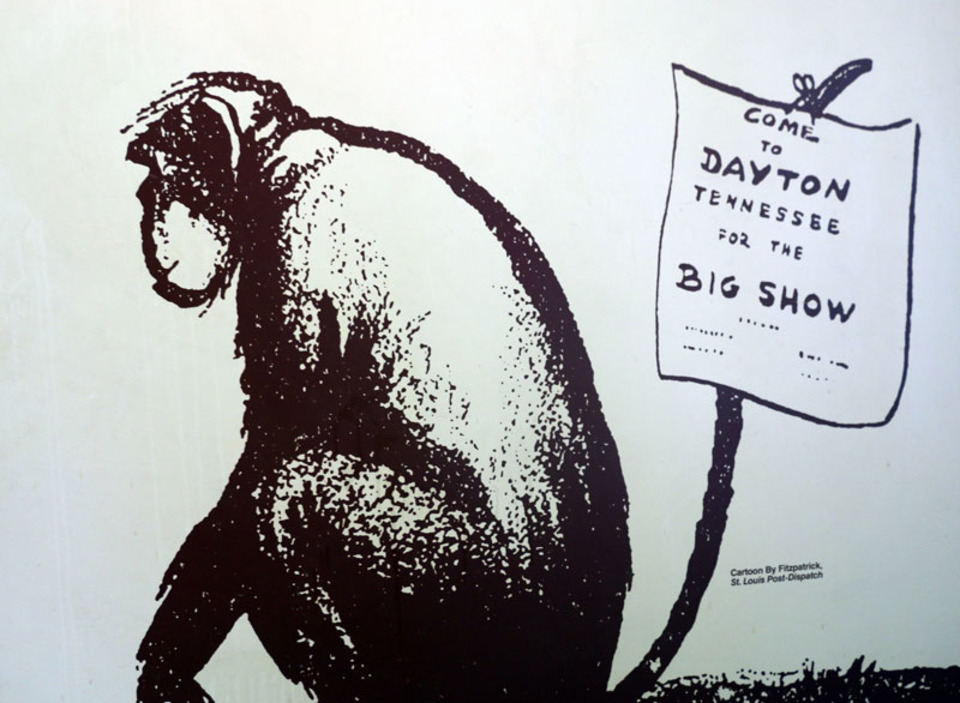
The first event leading up to the Scopes Trail was when representative John Washington Butler crafted a bill that banned the teaching of evolution in any school that received funding. This bill passed in March of 1925 The ACLU was against this bill so they were looking for a teacher to test this in the courts and they found the teacher willing to do this in John Thomas Scopes. Scopes and George Rappalyea planned for Scopes to get arrested and to enlist the ACLU as his defense in what would become a major court case. The publicity of this case really took off when three-time presidential candidate William Jennings Bryan offered his services to the prosecution, Bryan believed in a fundamentalist view of the Bible and was staunchly against Evolution. The defense had Clarence Darrow who was a top attorney and he was known for his agnostic views. While the trail was beginning the town of Dayton turned into a circus like atmosphere complete with revival tents and there was even a trained chimpanzee. The whole idea of a media circus was on display in the small town of Dayton, TN. Eventually the crowd become so large that the trail had to be held out on the lawn.
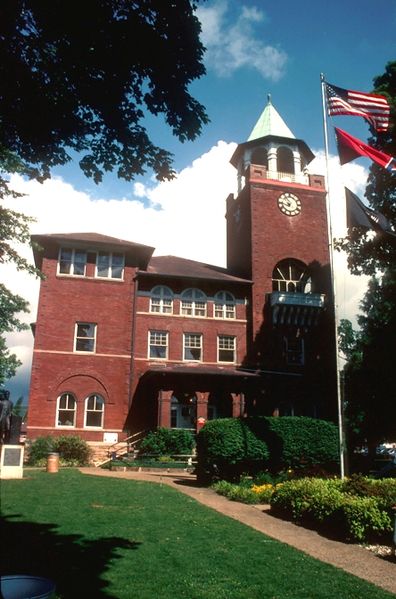
After the trial the judge found Scopes to be guilty of violating the TN law and was ordered to pay a $100 fine. Because the judge and not the jury set the fine, which was a violation of TN state law the guilty ruling was thrown out on a technicality. One key moment in the trail was when Darrow called Bryan to the stand and Bryan was subjected to a brutal cross-examination which caused him to make contradictory statements. A guilty plea along with Bryan failing health, which would shortly lead to his death, did not allow for Bryan to make another statement. Bryan’s legacy remains in Dayton as the Christian Bryan College was built right after the Scopes Trail and is currently home to around 1,000 undergraduates. A statue of Bryan is located in Dayton and later on a statue of Darrow joined Bryan’s at the Rhea County Courthouse lawn.

The trail did not answer constitutionally whether a state can prohibit the teaching of evolution but it was the first step in allowing for evolution to be taught in the classroom. The constitutional answer came in a 1968 Supreme Court trial that overturned an Arkansas law that was similar to the Tennessee law. Over 90 years later this very topic is debated among the American public. Dayton hosts a Scopes Trial Festival in which a play is put on about the trial.
Strawberries and Scenery:
Dayton is home to an annual strawberry festival which contains rides, a parade, and a beauty pageant to honor Rhea County’s relationship with strawberries. Besides strawberries there are abundant places where one can stop and enjoy some natural scenery. The eastern border of Rhea County is marked by the Tennessee River which features wildlife and recreational areas with abundant chances for river scenery. The Cumberland Plateau and its scenery which was covered quite a bit in my Waterfall Alley post is just to the west of Dayton. Rhea County is right on the edge of the Cumberland Plateau Waterfall Alley area. US Highway 27 also provides a pretty quick (within 1 hour) trip to Chattanooga.
Conclusion:
Should you take the time and visit Dayton and Rhea County? The answer to that is yes if you are in the general area. A visit to Dayton will at least give you some history about one of the most influential trials of the 20th century along with exploring some classic small town Eastern TN scenery. If you can time a trip to Chattanooga and its attractions with the Strawberry Festival in Dayton then you should try to do so. I haven’t personally been to the Strawberry Festival but I think it would compliment a Cumberland Plateau and/or Chattanooga trip pretty well. All and all venturing into these smaller towns can provide a person with a goldmine of historical information so I would always encourage one to do this.
That is all about the town of Dayton. Our next Highlighted Community is going to be one you do not want to miss. Later on this week we will be highlighting the Pigeon Forge/Gatlinburg area. There is plenty to talk about in the rich history of that area along with all of the attractions.
Have a nice day everyone and I hope you enjoyed learning about Dayton, Tennessee.
 Upland-South Science