Caves, College, Corvettes, and Culture are not just four words that start with C for the city of Bowling Green, Kentucky they are part of life for this growing community in south-central Kentucky. Today’s Highlighted Community looks at a community that started off a place marker in the wilderness to a thriving community that both a significant college town and an urban center for the southern portion of the Bluegrass State. Throughout this we will talk about its importance in the Civil War to its important Geological features. We will even talk about some corvettes as well. This is the Highlighted Community episode for the 3rd largest city in Kentucky, Bowling Green.
Location:
Latitude-Longitude:
36.97N and 86.48W
Climate:
Bowling Green has a climate that matches up with Hopkinsville and Clarksville, TN. It has hot and humid summers and variable winters. Annual precipitation ranges from 45 to 50 inches and average snowfall ranges from 8 to 10 inches a winter but that can drastically vary by year. Severe storms, flooding, and tornadoes are threats as well. In 1998 a major hailstorm produced over $500 million dollars in damage across the city. This storm also produced a tornado that tracked just south of the city.
Geology:
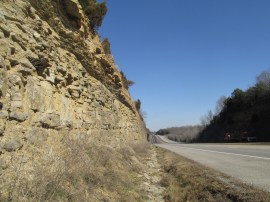
Bowling Green’s landscape consists of rolling hills, rocky outcroppings in places, caves, and springs making the area a classic example of urban development in a karst landscape. The limestone that underlies Bowling Green was formed over 330 million years ago when the city was a shallow, tropical, and clear sea similar to the Maldives or the Bahamas. This limestone is exposed in an overall mild to warm and wet climate and also there are cracks, between beds of limestone and other cracks in the rock that allow for water that contains carbon dioxide from both the soil and the atmosphere to work its way through the limestone and dissolve it. Over tens and hundred’s of thousands of years (sometimes even millions) this dissolution of bedrock forms connected cavities in the rock that become big enough for humans to wander through. These are known as caves. In Bowling Green, there are several caves but the most famous that and the one that is accessible to the public is Lost River Cave. Lost River Cave is part of a 7-mile cave system and contains the only cave boat tour in the state of Kentucky.
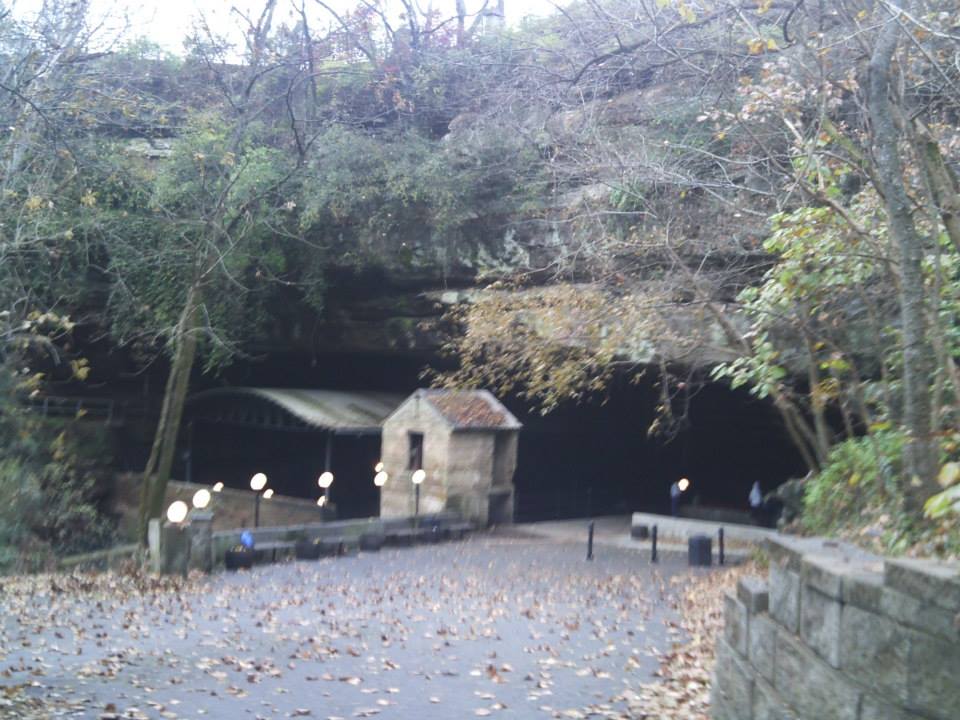
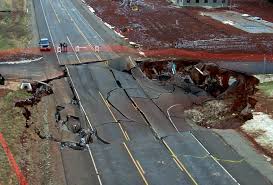
Sinkholes are a constant issue in Bowling Green and sometimes negatively impact the infrastructure of the city. Two recent examples of sinkhole collapse were the 2002 collapse on Dishman Lane and the 2014 collapse at the Corvette Museum. These sinkholes lead to cave systems that ran underneath the city. The former was actually part of the roof of State Tropper Cave, a cave that is not accessible to the public. Flooding issues also occur as the result of sinkholes. An example that all Bowling Green locals know of is Fairview Plaza which experiences what is known as Sinkhole Rim Flooding. This occurs when the cave system underneath back floods or drainage from the cave system is blocked and water has no choice but to flood the rim of the sinkhole.
At the subsurface another process occurs that influenced the city of Bowling Green. Over 1,000 feet below the surface porous limestone and dolostone units have entered the oil/gas window. Therefore, there is a localized oil play with these units which are nicknamed the Corniferous. Oil production was pretty popular especially in the 1910s and the 1920s. The streets of Bowling Green even had oil running down them when these ancient limestones and dolostone layers were drilled into.
Early History of Bowling Green:
https://www.bgky.org/history/early-history
^^ Much of Bowling Green’s Early History Information Comes From this Source ^^
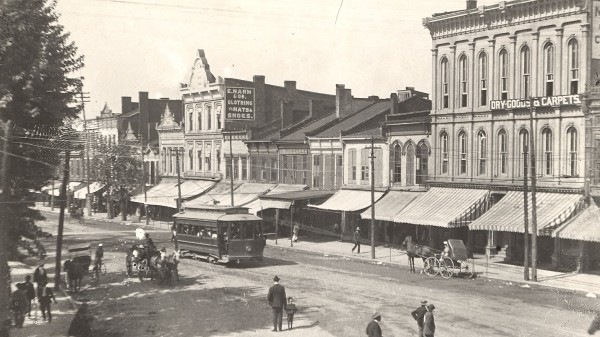
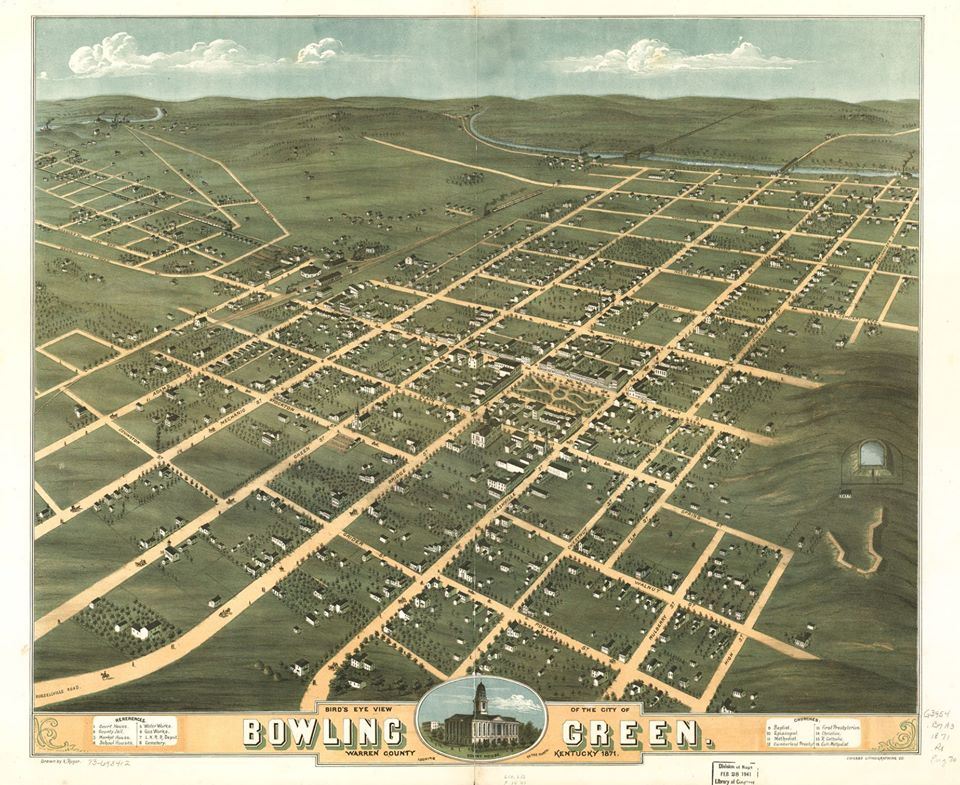
The Early History of Bowling Green starts with a group of long hunters ho carved their name on some trees in 1775. It would be 17 years before Kentucky became a state and overall the state was a lush wilderness with little sign of habitation besides the Native Americans. The longhunters had no idea of what lurked in what is now Bowling Green so they had to mark their name on anything as to not get lost. A man named Rober Moore in the early 1790s as pioneers advanced westward to settle the land built his home on a spring and this would become the city of Bowling Green. The county would be named after Dr. Joesph Warren who was a Revolutionary War Hero and the city would be named after Bowling Green Square in New York. It wouldn’t take long just a few decades for Bowling Green to attract a state bank and then some industry as the city advanced through the early 1800s. Railroad connections to Louisville and Nashville also helped out as well.
Bowling Green in the Civil War:
Kentucky was the perfect border state with both strong Union and Confederate support. With such a sharp divide the state briefly broke into two states. Confederate Kentucky consisted of Western and South-Central portions of the state while the Northern and Eastern portions were more loyal to the Union. The capital of Kentucky was in the city of Bowling Green and they even elected their own governor. This was very short-lived as the Union began to win key battles in the Mid-Atlantic region the Confederate influence began to weaken across the state.
Modern Bowling Green and Attractions:
After the Civil War, several of the major landmarks we know of today in Bowling Green start to take shape. In 1906, the Commonwealth of Kentucky established a Normal School in the city to train teachers. This school was called Western Kentucky State Normal School with its first president Henry Hardin Cherry. In the 1930s the teacher college merged with the Ogden College to become a science and teacher college. In the 1960s, this college merged with several smaller city colleges to become Western Kentucky University.


Figures 5 and 6: Western Kentucky Universty. The photo on the left is from the top of the hill and the photo on the right is at a Western Kentucky University football game.
On the northeastern edge of town a popular picnic place will start to grow and then became an amusement park and racing park. This place is known as Beech Bend. Since 1898 this area has been a popular picnic spot and now it is a popular racing destination and has a water and amusement park. Its attractions include several prominent water slides, common amusement park rides, and the Kentucky Rumbler Roller Coaster.
One of the biggest attractions in Bowling Green doesn’t have anything to do with roller coasters or even school. It does have to deal with a type of vehicle that you can use to get there. This museum is the National Corvette Museum where people come from all across the country to see one of the most iconic cars in America the Corvette. The Corvette Museum features old prototypes to modern marvels and has everything that a Corvette lover would possibly want and need. The museum even features a lap where you can take a Corvette or have a professional driver take you on a ride around the track. All of this and more at the Corvette Museum see more at this link below.
https://www.corvettemuseum.org/visit/plan-a-visit/

Bowling Green Today and Conclusion:
Bowling Green today is a fast-growing area with over 60,000 people and a metro area of over 130,000 people. With its growth and proximately to Nashville, I fully expect this area to continue to grow potentially into a mid-sized metro area. The city of Bowling Green has pretty diverse shopping options on Scottsville Road if you are into that, a college scene, several local parks, Lost River Cave, Beech Bend, and of course the Corvette Museum. The city is also only about 35 miles away from Mammoth Cave National Park which has the longest cave in the world and is within 2 hours from both Louisville and Nashville. If you like cars and caves then Bowling Green is a must stop for you.
I hope you enjoyed the Bowling Green post next up in the upcoming week will be Lexington, KY.
 Upland-South Science