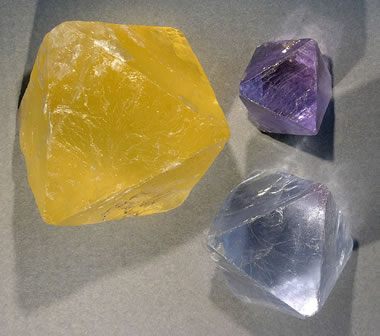
It is used to make gemstones, it is used to make glass stronger and more attractive, it is used to manufacture hydrofluoric acid, you can use this in the production of metals and steel, and fluoride chemicals which are used in substances such as toothpaste. This is all created by a very visually appealing mineral named Fluorite which is also called Fluorspar. Fluorite can come in a variety of different colors from purple, green, clear, black, yellow, and a more. Fluorite also contains four planes of perfect cleavage. Cleavage in Geology relates to the tendency of certain minerals to break along certain lines of weaknesses. Visually this also creates surfaces that reflect light so therefore fluorite is a very reflective mineral.
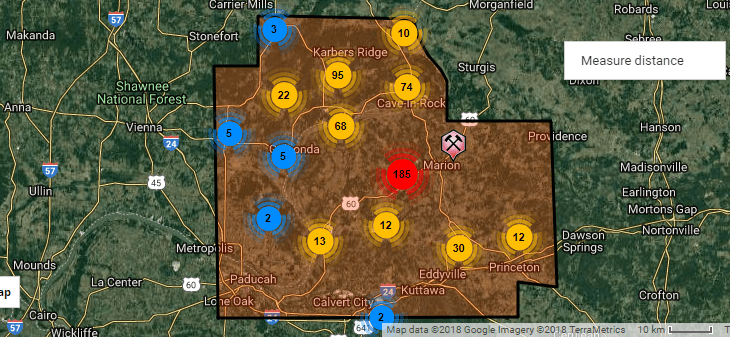
Why am I talking about this one mineral in so much depth on a highlighted community post? It is because the town of Marion is located in what is known by Geologists as the Fluorspar District. This is an area in SE IL and adjacent areas of Western KY which contain a high amount of fluoride. This post will discuss the founding of Marion and Crittenden County, the influence of the Fluorite, and some of the attractions of this area. This is the highlighted community post of Marion.
Location:
Marion is located at just above 37 degrees N and 88 degrees west longitude. Marion, KY contains a Humid Subtropical Climate with hot and humid summers. Winters are cool to mild. Snowfall averages about 10 inches a year but some winters will barely see a trace while others will see at least double that amount. Tornadoes are an occasional threat as well with one noteworthy tornado an F-4 striking the area in 1890.
Geology:
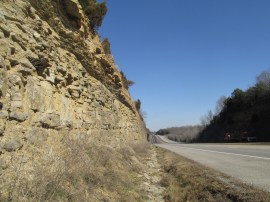
The geology surrounding Marion consists of mostly limestone but some sandstone layers do intermix with the limestone as well. Fractures and faults are common in this area and this help provides pathways for mineralized fluid to move and form the Fluorite and other minerals like Galena that we see today in the area. As this area was uplifted 250-290 million years ago this allowed for those warmer mineralized fluids to percolate through the cracks which is what created the Fluorite District. Some caves can be observed in the limestone as it does create a karst terrain.
History:
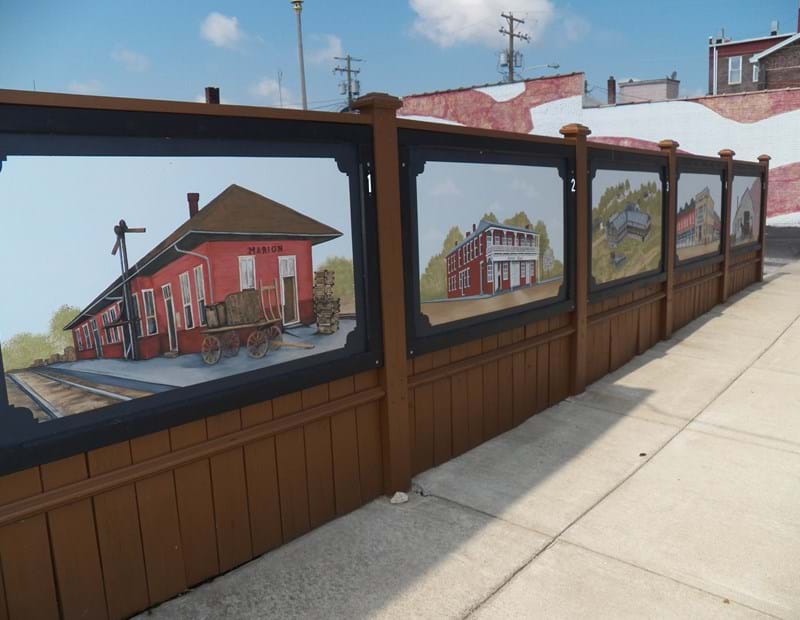
Crittenden County was founded in 1842 and named after John Crittenden who was an US Senator, attorney general, and Kentucky Governor. Marion and what was now known as Crittenden County before had a darker history. This was part of the route of the Trail of Tears an infamous set of pathways in which Native Americans were forced to leave their home in Georgia, North Carolina, and Tennessee and forced in exile to Oklahoma. Early on in Crittenden County’s history, it had its courthouse burned to the ground during Lyon’s courthouse raid across the state of Kentucky because it was suspected that the Kentucky courthouses were hiding Union soldiers. After the Civil War the railroad connected Marion to bring people in and out of the town. During the 1800s and through World War II the discovery of fluoride or Fluorspar in the area lead to some extensive mining. Fluorite was used as a flux in the manufacturing of steel. Extensive mining occurred but after World War II demand for Fluorite died down and the cost of producing it was greater than what one could play for importing the Fluorite from only countries. Fluorite is still mined commercially in Illinois but not in Kentucky. Marion and Crittenden County were also involved in the Black Path Tobacco Wars aka Nightriders (see the Hopkinsville post for more information about this event).
Marion, KY Attractions:
Marion is the site of one of the largest Amish communities in the state of Kentucky. This community was formed in the area in 1977 and now currently contains 400 residents. This community is complete with their own schools and churches. The Amish are considered Anabaptists and believe that only adults who had confessed their faith should be baptized. Due to this they were persecuted in England and ended up setting in Pennsylvania. As the USA expanded more and more Mennonite and Amish communities moved westward and one of the largest communities in KY is in Marion.
Ben E. Clement Museum
The Clement Mineral Museum is named after mining giant Ben E. Clement who has amassed quite the collection of Fluorite. Also preserved are fluorescent minerals, fossils, all the fluorite you can ever possibly want, and you can go on digs for your own minerals. Minerals you can find on the dig include fluorite, galena, calcite, and several others. for more information on the mineral digs and to schedule one go to the link below. Mineral shows also occur at this location as well.
http://www.clementmineralmuseum.org/index.shtml


Downtown:
Marion contains several antique shops as well as family restaurants. One place that I recommend is the Marion Diner which contains a variety of burgers and pasta like treats. There isn’t a lot of competition from big-box restaurants so that means that there are several places with small-town charm.
Overview:
Marion is a small town with a lot of charm. Whether it is the antique shops or history that lies its streets, the nice and convenient river ferry crossing along the Ohio River, or the mineral museum you will find a lot of charm and a nice change of pace in Marion, KY. Marion is a town rich with history and rich with influences from its very own geology and this is its highlighted community.
 Upland-South Science