
For this episode, we are going to go overseas. If possible I would recommend everyone goes overseas because although the Midwestern and Southeastern USA has a lot to explore there is plenty to explore all over the world whether it is the Western USA, Canada, Europe, Africa, or even Antarctica. I haven’t been outside the country many times but this is one of the few exceptions so I decided to do a highlighted community of it.
Location:
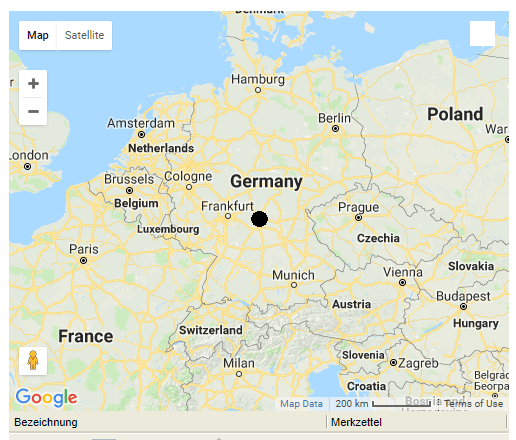
Latitude: 50.04N
Longitude: 10.22E
Schweinfurt is located in the state of Bavaria in Southern Germany. It is located in the district seat of Lower Franconia. Schweinfurt is located on the Main River about 25km’s northeast of the small city of Wurzburg and just under 300 kilometers north of Munich. Schweinfurt has about 55,000 people and is about the same size and population as Owensboro, KY or Jackson, TN.
This is our first post on a community that is east of the Prime Meridian. One interesting thing about much of Europe is that it is situated on the same latitude as Canada, but it doesn’t have the same climate as Canada on the whole. Schweinfurt and much of Germany contains a Marine West Coast or Oceanic Climate that is very similar to the Pacific Northwest versus a Subarctic or colder Humid Continental Climate that Canada has. Schweinfurt’s climate is pretty similar to the areas of Washington State that are just inland from areas like Seattle and Tacoma in that they have mild to cool winters that can be snowy and having mostly mild conditions throughout the year. Even the summers are pretty mild with average highs in the upper 70s and lower 80s and lower humidity versus the Midwestern and Southern USA.
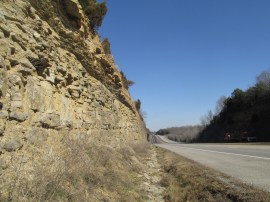
Schweinfurt sets above Triassic aged rocks predominantly mudstones, limestone, and dolostone. Around 230 million years ago the area transitioned from a river valley setting to a shallow marine sea. The shallow sea event is represented by the limestone and dolostone units.
^^ The link above provides more information about the Geology of Germany ^^

Early History:
Due to the extensive history of this area, I will just provide a very brief summary. The link below provides a fairly detailed timeline of history that goes all the way back to the Middle Ages.
https://www.schweinfurt.de/en/culture1/imperial2/index.html
The first documented mention of Schweinfurt came in the year 791 AD and 1241AD was the first mention as an Imperial City. It is not too uncommon for records to be scattered at best during the Middle Ages so that likely explains the big gap in records.
The Middle Ages were also a time of conflict and wars and Schweinfurt was destroyed multiple times during these wars.
The first was during the 1240s during a war between Earls of Wurzberg and Henneberg and the 2nd time was during the Margrave War. Although the city wasn’t destroyed there was occupation between Imperial and Swedish forces in the 30-year war between 1625 and 1650. In 1652 the German Academy of Natural Scientists Leopoldina was founded by four Physicists as Schweinfurt transferred from war-torn city to a city where science can be conducted. Leopoldina became the national academy of science for Germany and is the oldest such science academy in the world although it is currently located in Halle, Germany.
In 1802, the city becomes part of the state of Bavaria.
Ball Bearing and City of Industry
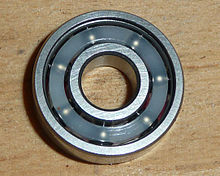
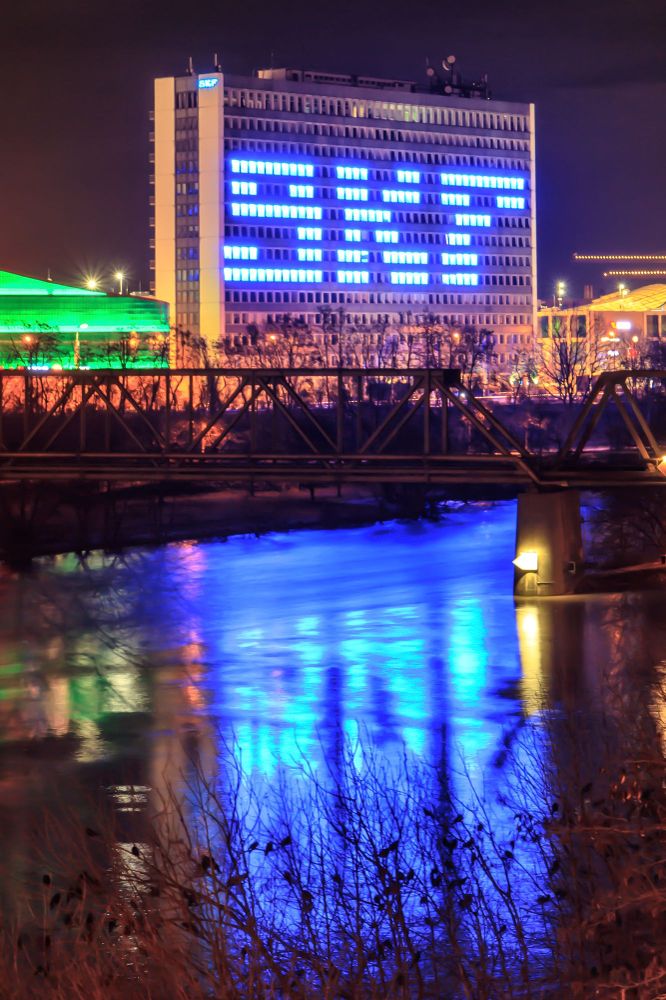
In 1883, one of the most important economic moments in Schweinfurt occurred and that was the birth of the ball bearing industry. The city would become the world leader in ball bearing which were important in reducing rotational friction in wheels or any circular objects. Due to Schweinfurt’s reputation and importance as it related to ball bearing will come at a price during World War II.
The City Faces War Again: WWII
WWII was defined by modern technology of that time and one of the modern technologies dealt with aviation. Both sides of WWII knew that air raids would be key to World War II. After the Allied Forces liberated France it was time to for them to start really bringing the battle to Germany and one way of doing that was to disable the ball bearing industry that was so crucial for Germany which led to air raids on the city of Schweinfurt. The United States Air Force launched an aerial bombardment over the city of Schweinfurt on October 14th, 1943 in a day that would be known as “Black Thursday”. The USA would use a swarm of Boeing B-17 Bombers and although they did inflict quite a bit of damage on Schweinfurt’s ball-bearing operation the day would end in defeat as 600 men would be killed or captured by German Forces.
http://www.historynet.com/world-war-ii-eighth-air-force-raid-on-schweinfurt.htm
^^ See this link for more on the Black Thursday Raid ^^
Post World War II and Modern Schweinfurt:
After 1945, World War II was over but the economic impacts and human toll of war were felt. Nazi Germany had collapsed and it was time to begin the process of rebuilding. Germany was split into two countries, West Germany which included Schweinfurt and East Germany. Berlin was split into West versus East as well. The Eastern areas were communist and the western areas capitalist which would last until the collapse of the Berlin Wall and German Reunification in 1989. Shortly after WWII Schweinfurt became the site of an Army Base for the United States of America which lasted till 2014. This allowed for the city to quickly recover from World War II despite the severe damage that was inflicted.
After 1991 the city shifted from an industry driven city to an arts-focused community as industry downsized at that time. The city has transformed away from an industry and military city to a city that embraces its cultural heritage and history. It is a city where you can see modern growth alongside buildings that have been standing since the Renaissance Era. A city that helped spawn artists and scientists but also played a major part in war and human suffering. An area where you can get out of your car and walk around and experience centuries of history while enjoying the mostly mild weather that occurs. This is just a summary and a highlight of Schweinfurt, Germany.
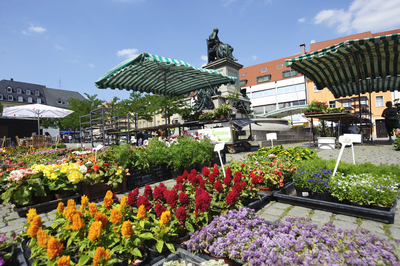
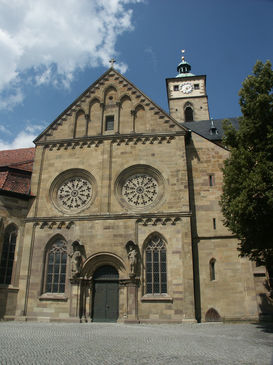
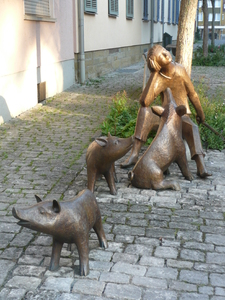
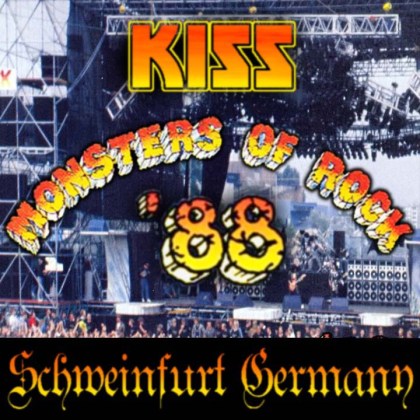
To conclude should you visit Germany and should you visit Schweinfurt. The answer to both is a resounding yes. Schweinfurt is big enough to have all the amenities you need for a good weekend but without the traffic and crowds of the larger cities. That doesn’t mean that you should only visit small cities like Schweinfurt and Wurzburg when you are in Bavaria but you shouldn’t ignore them either. I would recommend anyone who has the time and finances to go to Germany just for the experience and to experience a world outside of the United States. It wouldn’t be just a vacation but can also become a learning experience that will be with you for the rest of your life.
Thank you for reading and I hope that you will join me back in the USA as I will take a closer look at several towns in the Bluegrass State in the coming month.
 Upland-South Science