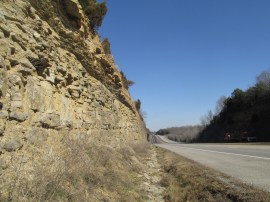

You may have heard of the saying that “big things come in small packages” well that saying applies to our highlighted city of the week, Corydon, Indiana. Corydon features a great mix of natural beauty (both surface and subsurface), history, wineries and outdoor events, and amenities all packed into one small town of just 3,000 people. At one time Corydon was the state capital of Indiana and the only Civil War battle to be fought in the state occurred in Corydon. Corydon is also connected to Louisville by Interstate 64 so if you want to enjoy rural America while also having a major city within 40 miles of your location then Corydon, Indiana is the place to be.
Location:
Latitude: 38.2120 degrees North
Longitude: 86.1219 degrees West
County: Harrison (Corydon is the County Seat)
Township (if applicable): Harrison Township
Corydon is located in Harrison County, which is in far southern Indiana. It is part of a region that is sometimes referred to as Kentuckiana which includes Louisville and several of the surrounding counties on both sides of the Ohio River both on Kentucky and Indiana side. Corydon is on Indian Creek which empties out into the Ohio River south of town. Corydon has an Ohio-Valley variant of a Humid Subtropical Climate which contains summers that are commonly hot and humid, winters that are highly variable and range from relatively mild to cold and snowy, and overall pleasant fall and spring seasons.

History of Corydon:
The following information comes from https://townofcorydon.com/town-history/
One of the important events for the Corydon was when the capital of the Indiana Territory was moved from Vincennes (in the southwestern portion of the state) to Corydon in 1813 because at that time Corydon was centrally located and it had built at that time an impressive stone structure. In 1816 delegates from across Indiana met in Corydon to draft the Indiana State Constitution to transition Indiana from a territory to a state. It was during the hot summer so the delegates decided to get some shade and do a lot of their work under an Elm tree which become known as the Consitution Elm. The following December, Indiana was admitted to the United States of America as the 19th state. Corydon remained the capital of Indiana until 1825 when Indianapolis due to its centralized location and treaties with Native Amercian tribes in that area became the capital. Indianapolis remains the capital of Indiana to this day.
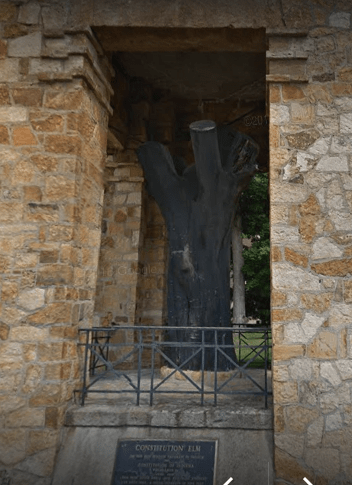
^^ Picture above is from Google Street View and shows a replica of the Elm tree that provided shade for the founders of the state constitution ^^
During the Civil War, Corydon will again play a role on a larger scale. On July 9th, 1863, John Hunt Morgan and his Confederate Calvary Divison began a raid by capturing two steamboats on the Ohio River and landing near Mauckport. His men forced the Indiana Legion (known as the Harrison County home grounds to flee) and allowed for the Confederacy to briefly capture Corydon. Morgan’s men looted money from the county treasurer, stole horses, and made out with food from local citizens before continuing on their raid through Indiana and Ohio. Morgan and his men were eventually captured on July 26th in Ohio. The Battle of Corydon was one of the largest battles north of the Ohio River and the only battle to occur in the state of Indiana during the Civil War. 11 men were killed and 41 were injured during this battle.
What Lies Below:
One major historical event that shaped Corydon and the surrounding area of south-central Indiana occurred around 330 million years ago. At this time a shallow, warm, tropical, and clear sea formed across the area. As mentioned in the Leavenworth post this area resembled the Maldives or the Bahamas more than modern Indiana. This was due to a higher sea level, land subsidence, and south-central Indiana’s position just south of the equator. Corydon is in its present place due to plate tectonics. Even though the Earth’s plates only move a few inches a year, over the course of hundred’s of million years it adds up to hundred’s of miles.
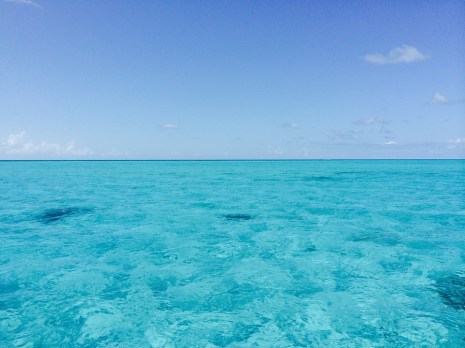
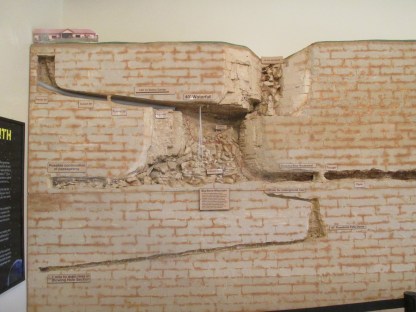
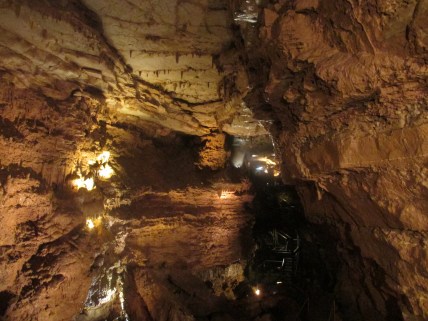
This shallow sea created limestone, a rock that when mixed with water that contains carbon dioxide from the soil and atmosphere. This helps create a karst landscape with sinking streams, sinkholes, and caves. In addition to the plentiful amount of limestone (hundred’s of feet thick), there is a predominant chert bed that contributes to the formation of the longest cave system in Indiana. Chert is a rock type that forms either when silica either by the weathering of the remains of certain microorganisms or is introduced to the system by silica-rich fluids after deposition of the limestone occurs. Chert is more resistant to weathering so when you have limestone beneath or above a chert layer you will often see preferred zones of weathering just above or below the chert bed because the water is bounded by the chert bed for which it struggles to weather. Cave development is also shaped by bedding planes, faults, or any connected passageways in the rock that water can get in and dissolve over tens and hundred’s of thousand years. Indiana Caverns, which is part of the Binkley Cave System which is the largest cave system in Indiana and the 11th largest in the United States. As of October 2016, the cave was over 43.9 miles long (https://www.indianacaverns.com/facts/cave-history).
Indiana Caverns is not just known for its amazing cave tours, it is also a major fossil site for Ice Age fossils (those that are several thousand’s of years old). Fossils and trace fossils in the area include Peccary skulls (Peccary are similar to boars), claw marks, a black bear skull, and a juvenile bison have all been found in Indiana Caverns. It is suspected that these creatures either fell into the cave or went into the cave for shelter and got lost or trapped. The cool temperatures of the cave have helped preserve these creatures and protect their remains from scavengers.
What Else Lies Above:
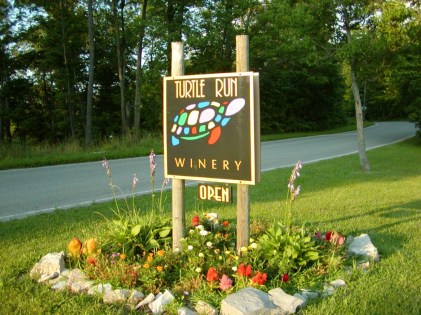
It isn’t just what is below ground that makes Corydon a tourist stop or a nice rural getaway for Louisville or Indianapolis residents, there is plenty to do above ground. Wineries such as Scout Mountain and Turtle Run can be enjoyed. The O’Bannon woods are nearby and provide plenty of forested hikes and camping. Corydon is also known for its antiques with antique malls and a downtown area full of antique shops that makes Corydon an ideal place for antique shopping.

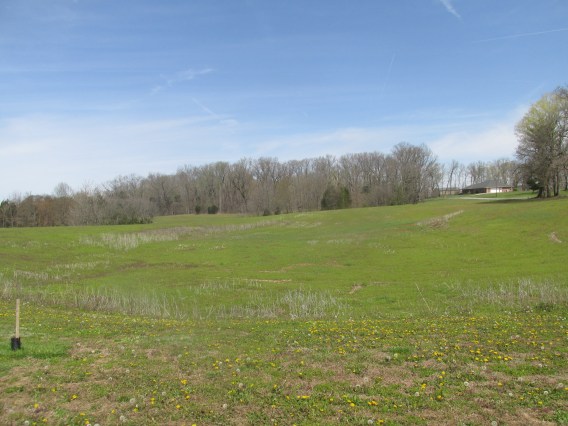
Rolling hills in the southern outskirts of Corydon. Indiana Caverns runs underneath this field. The rolling hills are a common feature of karst landscapes.
Personal Experience and Conclusions:
I only got to experience the town of Croydon for one day and I must say that despite Corydon being a pretty small town you will probably need a full weekend to accomplish all of the attractions in the Corydon/Harrison County area especially if you include the state forests just west of town. If you want to visit this town, which I highly recommend if you are anywhere in Louisville metro or the Southern Indiana area it is important to realize that a lot of the attractions close in the mid to late afternoon hours. The earlier you can get out of bed, eat breakfast, and get ready the better. That will ensure that you can get on a cave tour, a discovery center tour, visit the antique shops, head to a winery if you are into that, and get to have lunch and/or dinner at the locations in downtown Corydon. This community does have quite a bit of charm and I feel like this community and Southern Indiana, in general, is quite underrated in terms of overall scenery. Over time as Louisville continues to grow, I feel like this area will have more visitors and even more tourism for those who seek a break from the city life.
Links:
https://www.thisisindiana.org/
^^ This provides more information about lodging and scenic stops in the Corydon/Harrison County area. ^^
https://www.indianacaverns.com/facts/cave-ice-age-bones
^^ Indiana Caverns and information about Ice Age bones ^^
https://townofcorydon.com/town-history/
^^ Corydon, IN history ^^
https://www.in.gov/dnr/forestry/4826.htm
^^ Information about the Harrison-Crawford State Forest ^^
Stay tuned because next weekend I will cover the city of Louisville, KY.
 Upland-South Science